There is a common assumption that deserts signify scarcity, and that scarcity must have meant poverty.
Rajasthan often gets viewed through that lens.
But history tells a far more layered story.
Some people may be surprised to know that Jaisalmer was once part of the Silk Route, connected to trade networks stretching into the Middle East and Europe, long before cities like Mumbai or Delhi emerged as modern commercial centres.
This was not an isolated desert kingdom surviving at the margins.
It was connected. Trading. Prosperous.
And perhaps that should not be surprising.
Because the same society that built sophisticated water systems in one of the harshest climates also understood commerce, movement and exchange.
Resilience was never only ecological.
It was economic too.
The desert did not produce backwardness. It produced ingenuity.
Trade caravans moved through Jaisalmer carrying textiles, spices, opium, precious goods and stories. Merchants flourished. Communities adapted to routes, seasons and uncertainty. Wealth was generated not despite the desert, but partly through understanding how to live within its constraints.
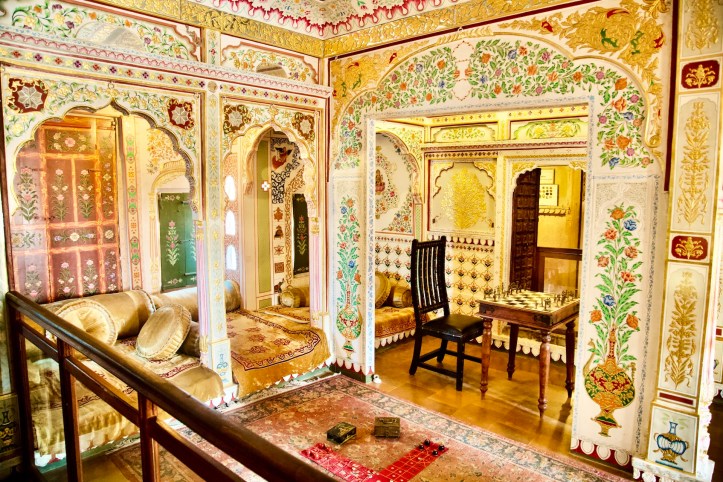
Even the architecture of Jaisalmer reflects this.
Its havelis were not built by impoverished people.
They were built by traders.
By people participating in global exchange centuries ago.
I often feel we underestimate what older societies had figured out.
We assume progress began recently.
But many regions we now view through developmental deficits once held highly evolved systems — of trade, water, governance and community.
Rajasthan is one such example.
Its story is not just about dunes and drought.
It is also about civilisational intelligence.
And perhaps that matters today.
Because when we see a landscape only through scarcity, we miss the systems of abundance it may have once created.
Jaisalmer reminds us of something simple:
A desert can be a frontier of innovation.
And history is often richer than our assumptions