In the Thar, water is understood in three forms. Rain that falls from the sky. Groundwater hidden deep below. And then there is a third kind, less spoken about but remarkable in its ingenuity — rejani pani, water that percolates through the earth but never reaches the deep aquifer.
This is the water that beris or kuins hold.
A beri is not just a small well. It is a response to close observation of land, soil and patience. In places where gypsum or multani mitti prevent seeped rainwater from mixing with saline groundwater, sweet water gathers quietly underground. Communities learned to read this.
And they dug for it.
Often narrow and astonishingly deep, these wells were crafted by specialist builders called Chejaro. It was difficult and sometimes dangerous work. Loose stones could fall. Gas leaks could occur. Gypsum had to be broken by hand. Yet they were built, again and again.
What moved me was not just the engineering, but the social ethic around them.
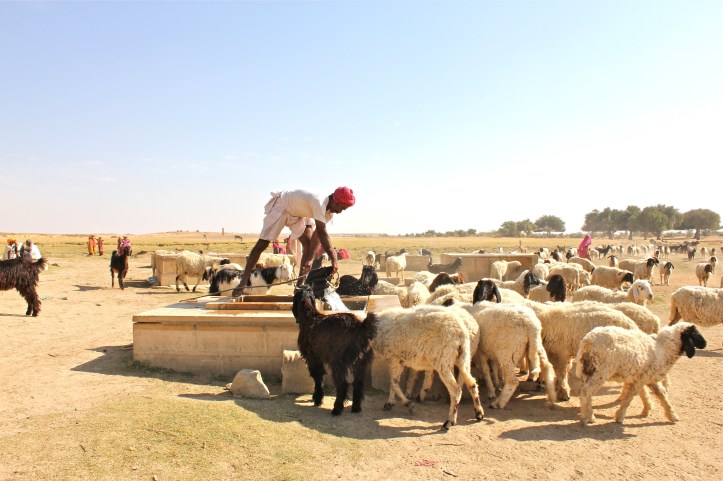
A beri may be named after one person, but it belongs to everyone. Villagers help dig it together. Water is shared. Pride lies not in ownership, but in how many people a well can serve.
There is a beautiful idea hidden there.
Scarcity did not produce hoarding. It produced cooperation.
In a desert, even a drop was treated like inheritance.
Beris were not only structures. They were a culture of trust built around water.
 amittiwari.org